Register S CorpAfter both offices are named
Equity, payroll setup, the monthly close, and the return start when the acceptance is real.
Ask about payday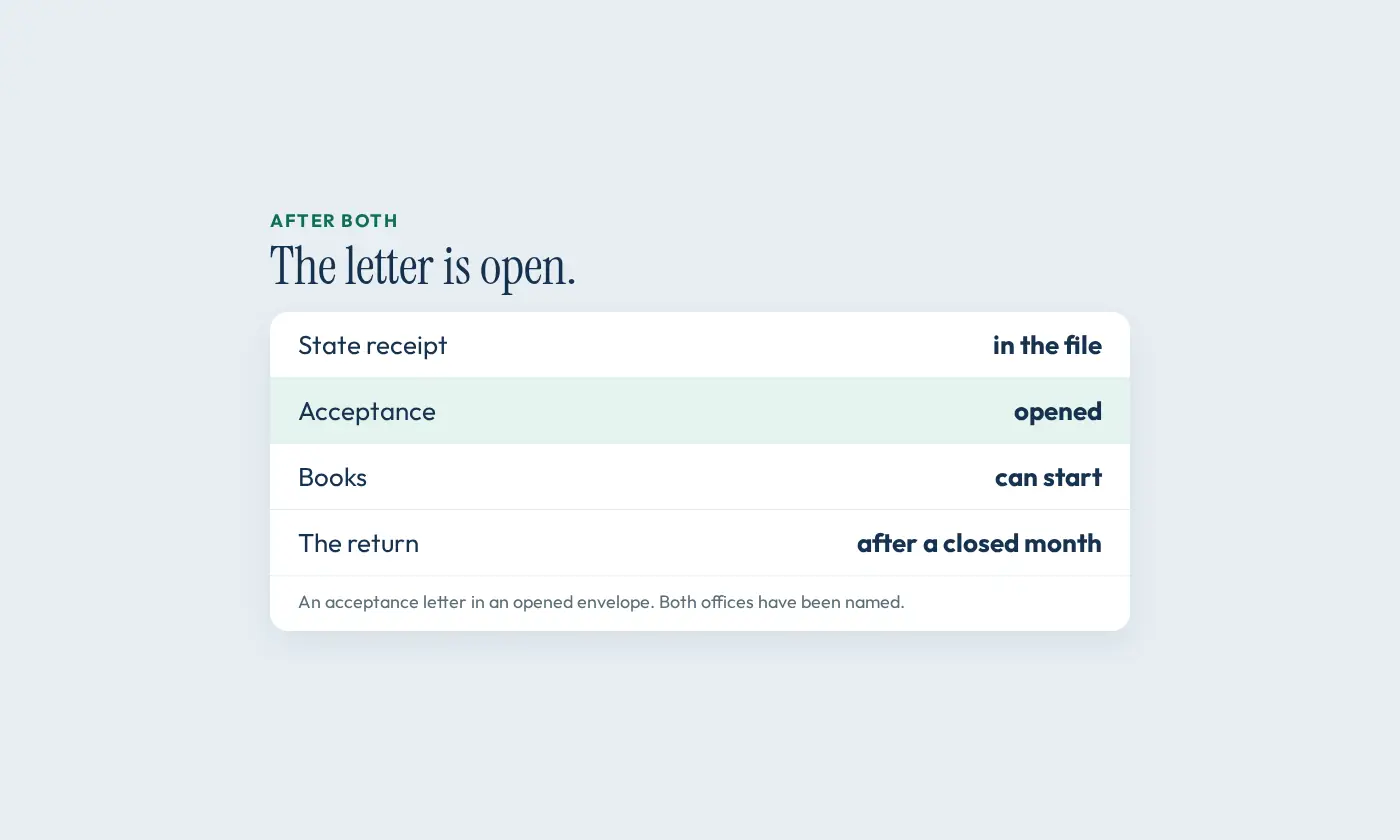
Equity, payroll setup, the monthly close, and the return start when the acceptance is real.
Ask about paydayOnce the state filing and the federal acceptance are both named, the equity chart has room to be honest. Money the owner puts in is a contribution. Money the owner takes out after wages is a distribution. Profit left in the company stays in retained earnings. Those three are neighbors. They are not the same neighbor. A single owner's draw account that swallows all three will make the return argue with the bank.
New files often arrive with opening balance equity still holding a plug. The plug is the difference software could not classify on day one. We empty it by classifying the real balances. We do not leave it as a permanent line and then explain it every month. A plug that survives the first close becomes a story nobody can tell a lender.
The accumulated adjustments account is a tax computation. It tracks items the federal rules care about. It is not a book account you reconcile like cash or accounts payable. Putting it on the balance sheet because a template offered the line is how a management report starts speaking tax language to a person who asked what cash did.
Setup is a list with an order. Federal identification number. State withholding account. State unemployment account. A provider the owner already runs. A written description of the work the owner does, so reasonable compensation has somewhere to stand. Deposits and wage forms stay on the provider. The quarterly payroll return, the annual payroll return, and the year-end wage statement are that provider's payday work.
We do not run payday. We do not take over a workforce. We point the provider at the status the acceptance describes, and we look at whether the wage matches the work before distributions get casual. If the acceptance is not in the file yet, this list waits. A provider pointed at a hoped-for status creates deposits that are hard to undo.
Shareholder employees are the usual sensitive case. They work in the company and they own it. The wage is for the work. The distribution is for the ownership, and it comes after the wage once the election is real. A public page will not name a dollar figure for that split. The work itself is the evidence, and it is different in every company.
A month closes when the accounts agree with the statements and the open items are small enough to name. Open months are caught up before a rhythm starts. Unfinished months are completed in this practice, or the work is turned down. Building a return on a month that never closed means the return inherits every unreconciled difference. That inheritance is expensive in time even when no one prints a savings claim, and we will not print one.
The return follows the closed year and the status the papers support. If the papers support the election, the return is prepared on that basis. If a state does not conform to the federal election, the state return may differ, and we prepare for the state where you file rather than for a generic state. No state is used here as a mascot. The filing office you actually use is the one that counts.
Statements and a short report of what changed are part of the month. They are management reports. They are not a signed assurance. An audit, a review, or a compilation requested by a lender is not the month described here. That request belongs with a firm that can sign it, and the disclosures page writes the stop. This page is the ordinary close.
The acceptance, the provider's name, and a sentence about the work the owner does are the three facts that let this page become an engagement conversation. Bank access comes later, under a written scope. A first note does not need every login. It needs the status and the shape of the work.
If opening balance equity is still on the balance sheet, say so. If wages were never run because everyone was waiting on the letter, say so. Both facts are ordinary. Neither one is a confession. They tell us where the chart actually is.
Steven Palmieri, Tax CFO, keeps this part of the work with the practice. The state office has finished its part. The federal acceptance has finished its part. The rest is the ledger, the provider you run, and the return.
Say whether the acceptance is in the file and whether a provider already runs payday.

You will be talking to the Steven Palmieri practice.